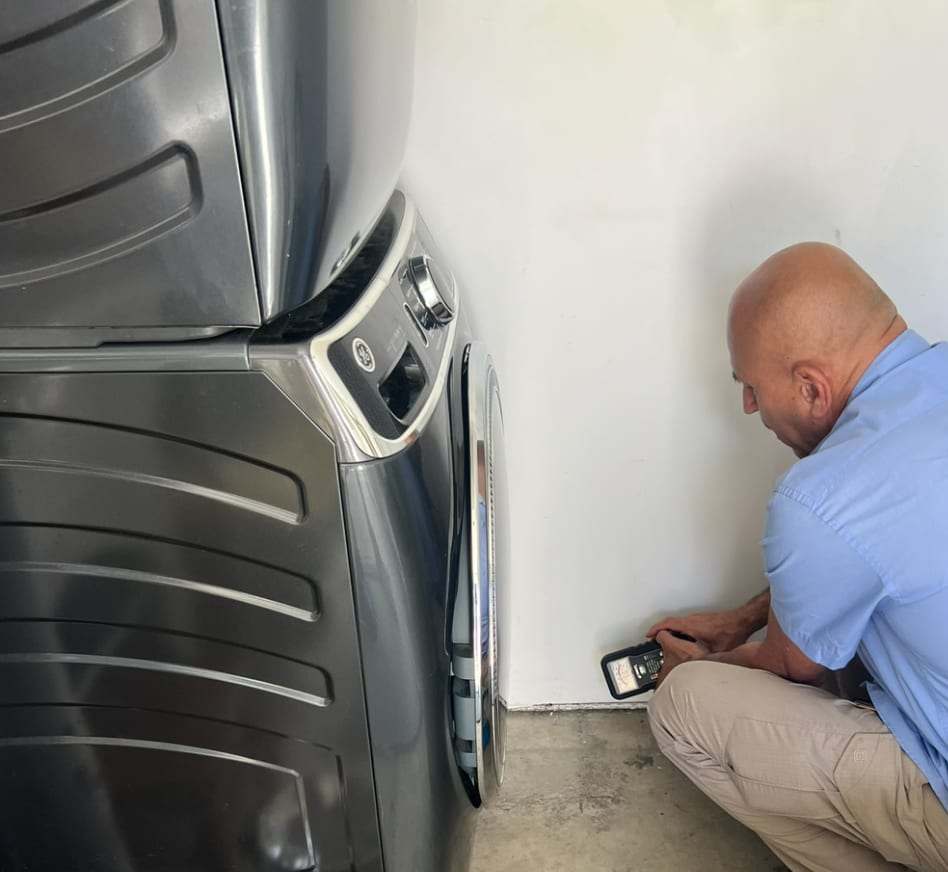
Washing machine
- Shutoff
- Two valves (hot and cold) behind the washer
- Hidden path
- Under the machine, into the subfloor, and through the ceiling below an upstairs laundry
- Check
- Ceiling below, baseboards in adjoining rooms
Washers · Dishwashers · Water heaters · Fridges
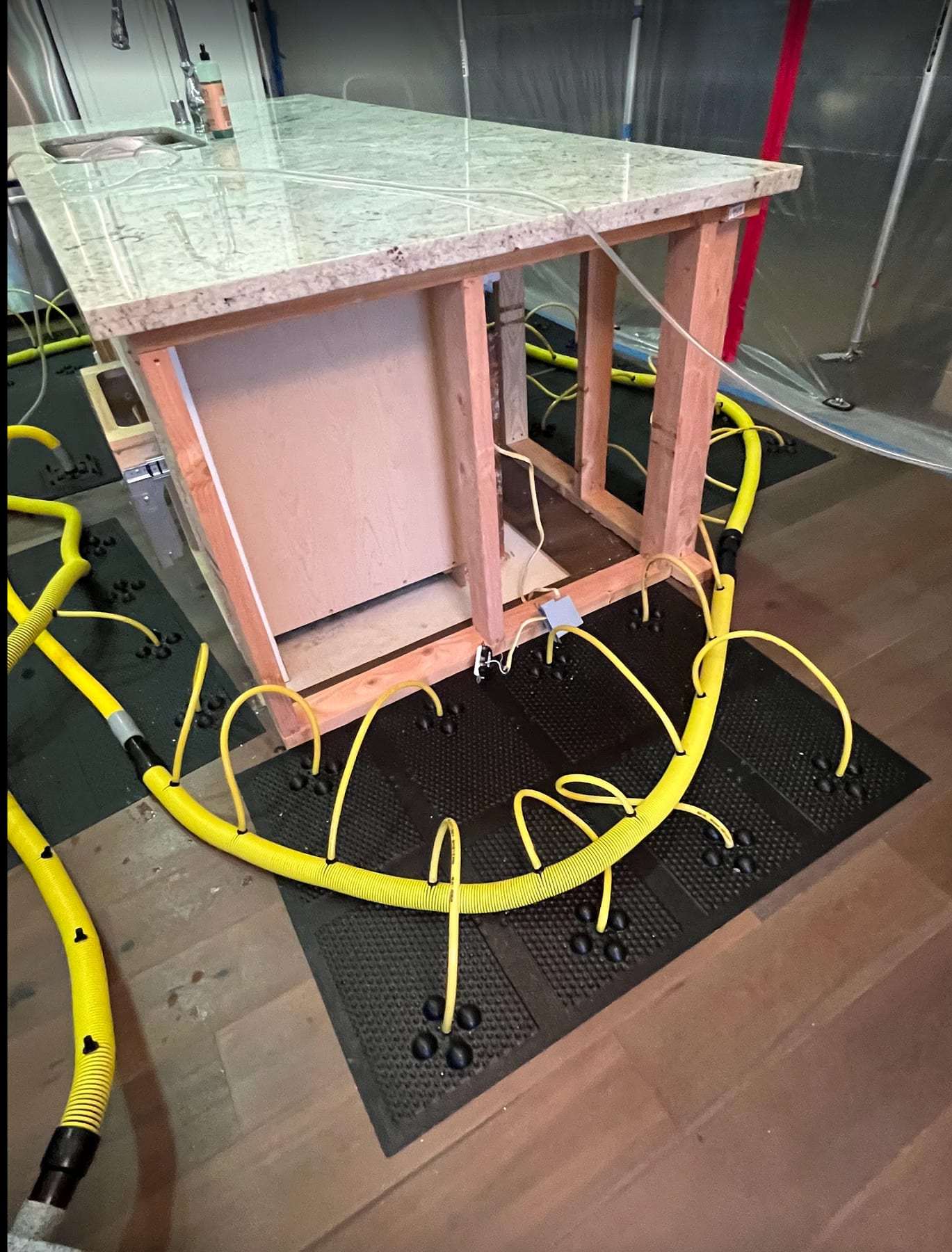
Appliance leaks often hide under cabinets and flooring for days. Good restoration work finds where the water went, extracts it, and dries the structure.
Guides and worked examples for washers, dishwashers, water heaters and ice makers.
Each field note takes one appliance or one question and works through it: how that machine tends to fail, where its water travels in a ranch, bi-level or two-story Arvada house, what to check first, and what to ask an installer, manufacturer, insurer or drying contractor before anyone starts tearing out cabinets or flooring..
These checklists and forms are meant to be filled in, printed or kept on a phone.
Every example here is invented to show a pattern, not drawn from a real household or job.
Where an appliance sits depends a lot on when a house was built.
An Arvada guide to appliance leaks: what to shut off, where water hides, and what to ask.
ZIP codes served: 80002 (Arvada), 80003 (Arvada), 80004 (Arvada), 80005 (Arvada), 80007 (Arvada).
Also nearby: 80033, 80212, 80030, 80221, 80211, 80214, 80215, 80031, 80204, 80202, 80260, 80226, 80216, 80021, 80205, 80203, 80229, 80218.
Arvada spans Jefferson and Adams counties northwest of Denver, with established neighborhoods around Olde Town Arvada and newer subdivisions farther west and north. Many homes have upstairs laundry rooms or basements where water heaters sit beside finished space, the two layouts where appliance leaks do the most damage.
Appliance supply hoses and water heaters wear out on predictable timelines. Replacing rubber washer hoses with braided lines and checking water heaters as they age can prevent many of these leaks.
Turn off the appliance's water supply valve, or the main if you can't find it.
Unplug the appliance if it's safe to reach the outlet without standing in water.
Pull out toe-kicks or move the appliance if possible to let air in.
Keep the failed hose or part; your insurer may ask about it.
Each appliance fails differently and sends water somewhere different. Knowing where to shut it off, and where to look afterward, saves the most damage.
Finding the hidden water is as important as removing the obvious water.
Use moisture meters to map wet flooring, subfloor, cabinets, and ceilings below.
Remove standing and absorbed water.
Remove toe-kicks or affected flooring so air can reach trapped moisture.
Run drying equipment and take daily readings.
Repair or replace flooring, cabinet bases, and drywall once dry.
A washer drain hose comes loose during a cycle, sending water through the floor into the kitchen ceiling.
Laminate flooring in front of a dishwasher starts to bubble, and the subfloor beneath is wet across the kitchen.
A 15-year-old water heater in a basement utility room fails, soaking carpet in the adjoining room.
Ask whether employees or subcontractors will do the drying, whether the technicians hold IICRC certification for water damage work, and whether the repairs are subcontracted.
No business has been confirmed to answer requests or perform work for this site, so none is named here.
This form is not connected. This website is a draft preview: no business has been confirmed to receive requests, so the fields below are switched off and nothing can be sent. In an emergency, call 911.
Shut off the supply valve, keep the failed part, photograph the damage, call your insurer, and choose a restoration company you have checked.