The scenario
Illustrative example. Not a real job or customer.
Picture an older Arvada bungalow with hardwood flooring that runs from the kitchen into the dining room. A compression fitting behind the refrigerator begins to weep. The fridge sits tight against the wall, so nobody sees it.
- A few boards near the refrigerator begin to cup.
- The household pulls the fridge forward and finds a damp floor and a wet valve.
- They close the small shutoff valve and photograph the area.
- A plumber replaces the fitting; a drying contractor takes readings across the kitchen and the dining room.
- The household asks about drying hardwood in place versus replacement.
Readings show moisture spread under several boards and the adjoining cabinet toe-kick. The contractor suggests controlled drying and a recheck. Boards that stay cupped are discussed afterward.
Options after the drying readings
| Option | Pros | Cons |
|---|---|---|
| Dry in place slowly | May avoid replacing boards | Slow; cupping may remain |
| Lift affected boards | Subfloor can dry faster | Boards may not go back; matching is an issue |
| Replace a section | Clean result if match is good | Finish matching can be hard |
| Refinish after drying | Can reset a lightly cupped floor | Only if boards flatten |
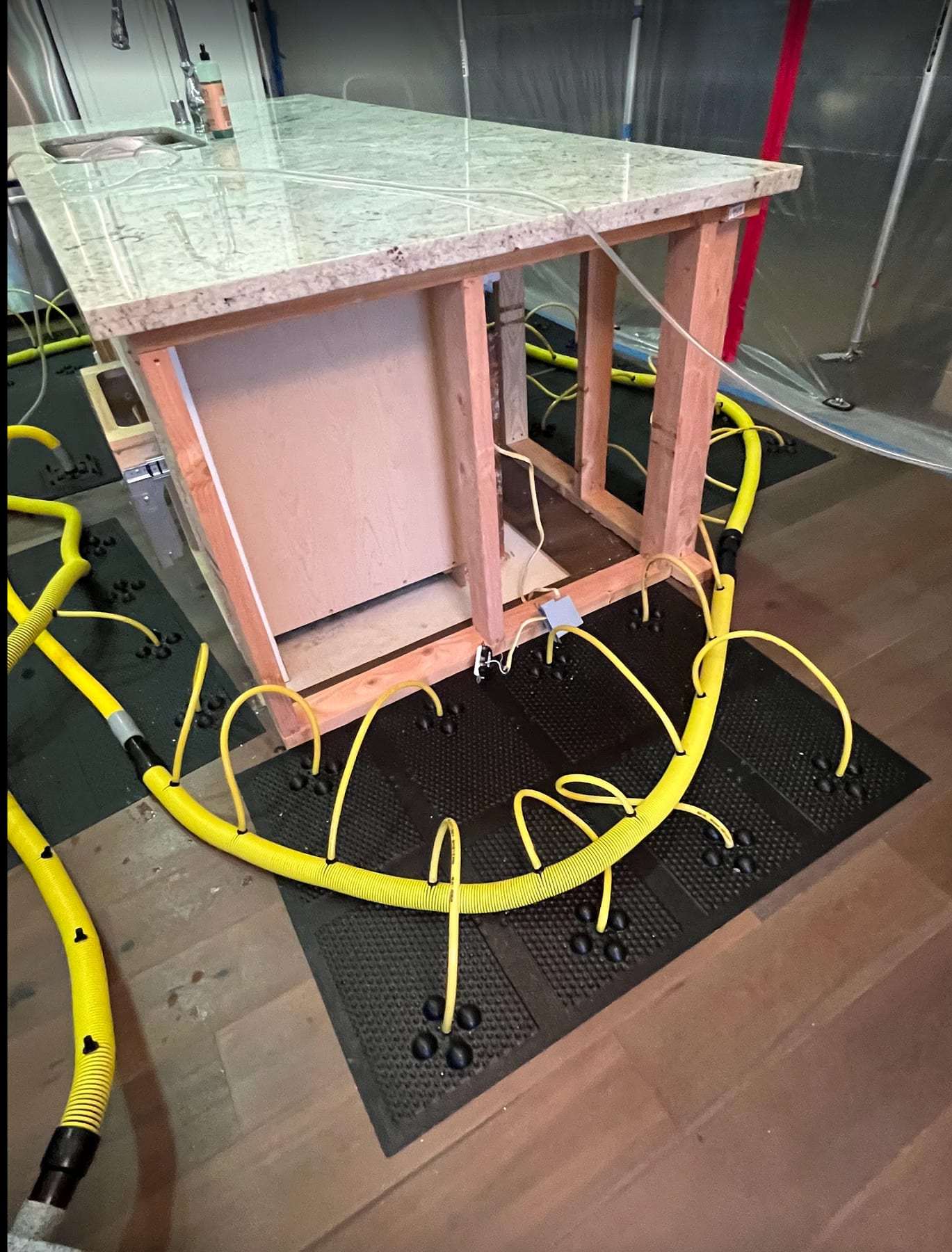
Drying mats and hoses on the floor around a kitchen island frame. A representative photo of the task, not a record of work at any particular property.
Questions this example raises
- How will the drying plan treat the cabinet toe-kick next to the fridge?
- How long will the floor be monitored after equipment leaves?
- What happens if cupping persists?
- How will the insurer view a leak that may have lasted a while?
Takeaway
A moderate leak at a hidden fitting can affect more floor than the fridge footprint suggests. A quick look behind the refrigerator during a seasonal check, and a closed valve before trips, are small habits that may reduce risk. The guide on ice maker lines and the flooring guide cover the details in a real situation.
In the invented example the household also learned something about timing. The flooring had been in place for years, and cupping was the first visible sign. Had they looked behind the refrigerator when cleaning, the weeping fitting would have been obvious. A habit as simple as checking the valve when the fridge is moved for cleaning, and photographing the dry fitting, creates a baseline for comparison later.
The invented household also wrote down the model of the refrigerator and the type of fitting the plumber used, so a future repair starts with the right information instead of guesswork.
General information for Arvada, not a quote or professional advice. In an emergency, call 911.