The scenario
Illustrative example. Not a real job or customer.
Picture a newer two-story with a laundry room upstairs. A household leaves for an afternoon and a washer is mid-cycle when the hot hose separates from its coupling. Water sprays at line pressure for some time. The pan under the washer overflows, and water finds the floor seams and the opening around a pipe.
- A neighbor or the household returns and finds a wet hallway and a stain spreading on the ceiling of the room below.
- They close the washer valves, or the main if the valves are wet and hard to reach.
- They keep people away from a bulging section of ceiling and do not use the light fixture that is wet.
- They photograph everything and keep the hose.
- They call an electrician about the fixture and a drying contractor about the ceiling.
The washer is checked and reconnected with new hoses. The ceiling is opened in one area so wet insulation can be removed and the cavity dried. The household reviews how it can add a sensor and a pan drain.
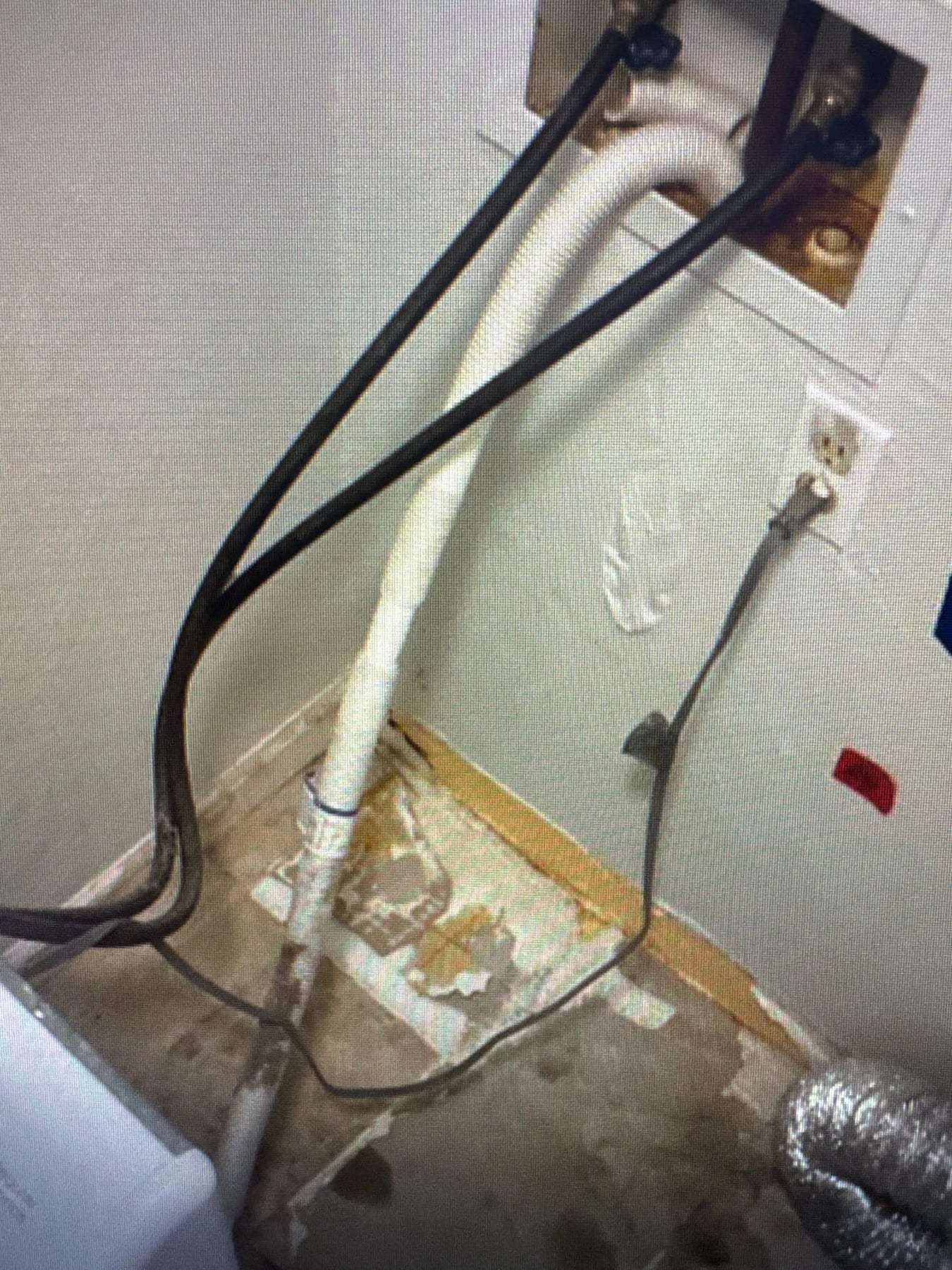
Washer supply box with water staining down the wall and floor. A general example of this kind of work, not a photo of a particular home, business or job.
Why the timing matters in this example
The washer was running with nobody home. That is the common thread in many washer leaks: a pressurized connection fails when no one is there to close a valve. Water had time to reach the cavity below before anyone knew. The invented household could have limited this by closing the valves after laundry day or by adding a sensor that sends an alert to a phone.
Decisions the household faces
- IfThe ceiling is stained but firmAsk for moisture readings and discuss drying through small openings.
- IfThe ceiling is bulgingKeep clear and ask a contractor about safe removal.
- IfA light fixture is wetKeep it off until an electrician checks it.
- IfInsulation above is wetAsk whether it will be removed.
- IfThe floor upstairs is laminateAsk whether the flooring and subfloor are included in the drying plan.
Two ways the day could go
| With sensor and reachable valves | Without either |
|---|---|
| Alert reaches a phone | Water runs until someone returns |
| A neighbor can close the valves | More cavity is wet |
| Less water reaches the ceiling | More material may need removal |
What this example teaches
Reaching the valves and noticing the leak early are the two biggest factors. The guide on upstairs laundry leaks and the first hour worksheet are good companions to this scenario.
General information for Arvada, not a quote or professional advice. In an emergency, call 911.