A tank is a pressure vessel full of hot water
Most homes in the area still use a storage tank water heater holding a few dozen gallons. When the shell fails, that whole volume can leave in a short time, and it keeps coming as long as the cold supply line stays open and refills the tank. That is why the first move is the cold inlet valve, not mopping.
Many Arvada houses have the heater in a basement utility room next to finished space, in a garage corner, or in a main-floor closet in a ranch. Each spot changes the outcome. A basement floor drain may carry water away; a carpeted adjoining room will wick it; a closet over a finished ceiling sends it downward.
Fitting leak versus tank shell leak
The difference decides whether repair or replacement is on the table.
| Usually repairable | Usually points to replacement |
|---|---|
| Drip at a supply or outlet fitting on top | Water seeping from the jacket or the base of the tank |
| Wetness at the temperature and pressure relief valve discharge pipe | Rust streaks running down the shell |
| Seep at the drain valve near the bottom | Puddle that returns after the fittings are dried |
| Condensation on cold pipes after a hot spell of use | A heater near or past the age its maker expects |
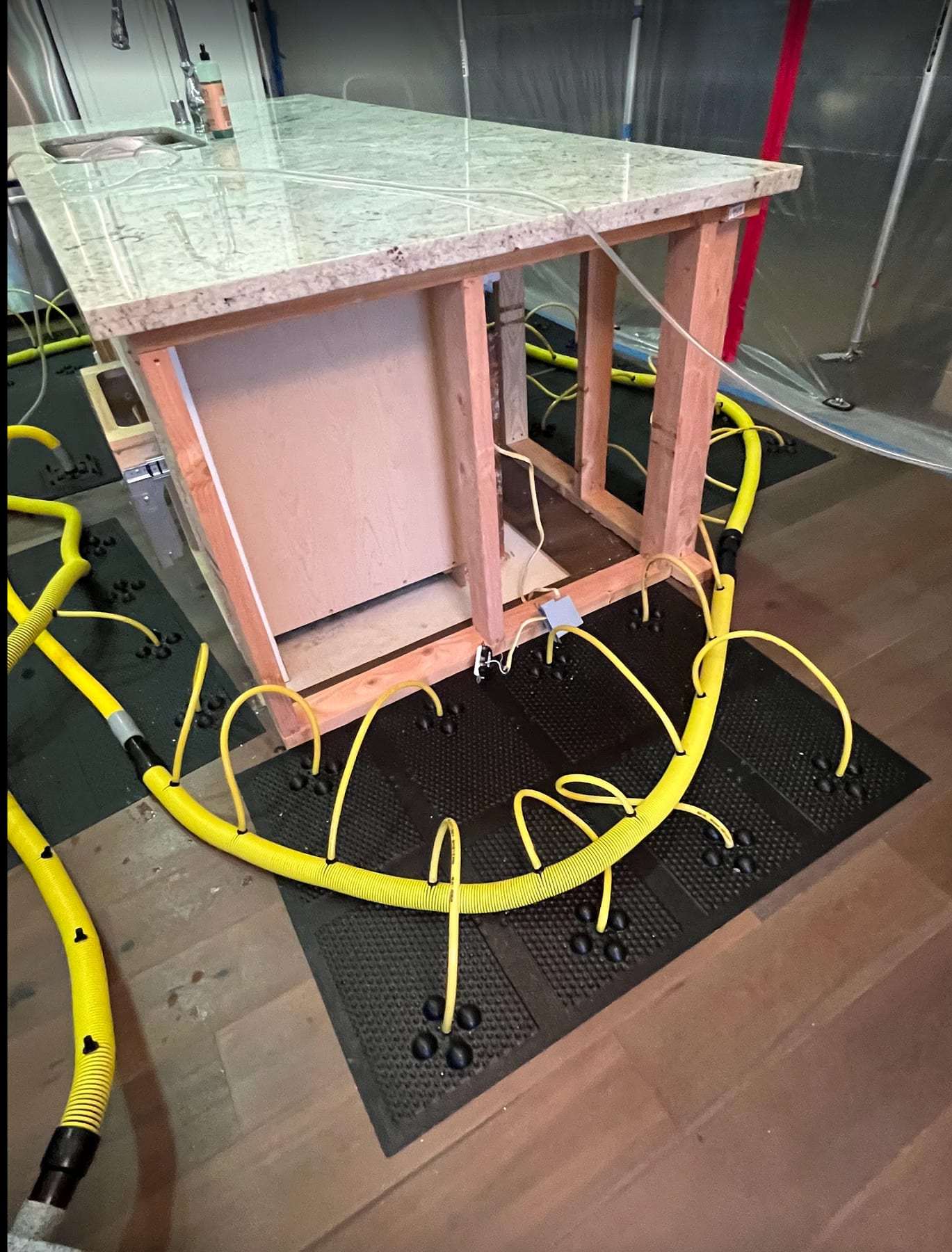
Drying mats and hoses on the floor around a kitchen island frame. A representative photo of the task, not a record of work at any particular property.
Shutoff order for a leaking tank
Turn off the cold inlet valve
It is on the pipe entering the top of the tank, usually with a handle or wheel. Closing it stops the tank refilling.
Switch off the energy source
For electric models, turn off the breaker. For gas models, set the gas control to off or pilot, following the label on the unit. If gas is smelled, leave and contact the gas utility from outside.
Relieve pressure only if needed
Opening a hot tap upstairs can break the vacuum if you plan to drain, but hot water can scald; wait until it cools if possible.
Contain and photograph
Document the unit, the nameplate with age information, and the wet area before moving anything.
Where the water usually goes
| Location | First wet area | Hidden risk |
|---|---|---|
| Basement utility room, slab | Concrete, then adjoining carpet | Wall bottom plates and stored boxes |
| Garage corner | Garage floor, sometimes a shared wall | Drywall base on the house side |
| Main-floor closet | Closet floor, then hallway flooring | Subfloor and ceiling or crawl space below |
| Attic or upper closet | Ceiling below, quickly | Insulation holding water above drywall |
After the leak is stopped
A plumber or appliance technician handles the heater itself: repair, replacement and venting or electrical connections. Separately, ask a drying contractor or an insurer's representative about drying the affected materials, because a dry-looking floor can hold moisture under carpet pad or behind baseboards. A drain pan with a pipe to a drain, and a leak sensor on the floor beside the heater, are common mitigations to ask an installer about when replacing a tank.
Common questions
Can I keep using hot water from a leaking heater?
It is safest to shut the heater off and cold inlet closed until a qualified person looks at it.
How old is too old for a tank heater?
The maker states an expected life for each model, and the nameplate or serial number usually indicates the build date. A technician can read it for you.
General information for Arvada, not a quote or professional advice. In an emergency, call 911.