Cooling makes water
An air conditioner or heat pump pulls humidity out of the air as it cools it. That water drips onto a coil pan and leaves through a condensate drain line, which runs to a floor drain, a sink drain, a pump or outdoors. Summers on the Front Range are dry compared with many places, but a system still makes a steady trickle on warm days. The line is narrow, and algae or debris can clog it.
The air handler may be in a basement, a closet, an attic, or a crawl space. The farther it is from a drain, the more likely a pump is involved, and pumps are another part that can fail.
Where a drain failure shows up
| Equipment location | Overflow path | Early sign |
|---|---|---|
| Basement furnace and coil | Floor around the unit, then nearby carpet | Damp floor near the furnace in summer |
| Closet on the main floor | Closet floor, hallway flooring | Musty closet, stained baseboard |
| Attic air handler | Auxiliary pan, then ceiling below | Ceiling stain or sag during hot weather |
| Crawl space unit | Soil or insulation under the floor | Odor, wet insulation |
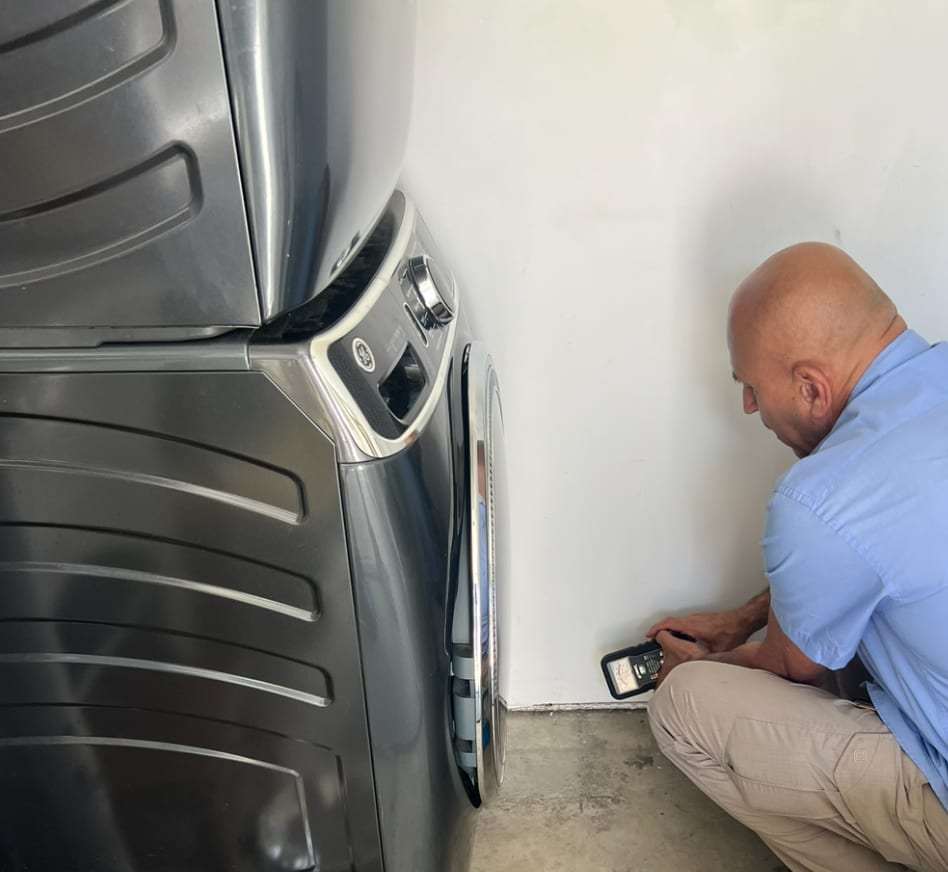
Inspector checking moisture at the base of a wall beside a washer. Example of the work involved; the photo does not show a specific property or a job for this site.
Simple checks before cooling season
Find the drain outlet
Follow the line to where it ends and confirm it is not kinked or crushed.
Look at the pan
If the pan is accessible, check for standing water or slime.
Test the safety switch
Many systems have a float switch that shuts cooling off when the pan fills. Ask an HVAC technician how to test it for your equipment.
Pour a flush
Some manufacturers allow a small amount of a cleaning solution or plain water down the access port; follow the maker's instructions.
Check the pump
If a pump is present, pour water in the reservoir and watch it run.
If water has already spread
Turn off the cooling at the thermostat so no more water is made. Dry the pan and line as best you can, and ask an HVAC technician to clear the line. For ceilings and insulation that got wet, a drying contractor can measure moisture, and may recommend opening the ceiling if insulation holds water. Water from condensate is generally cleaner than water from a drain backup, but a line that has been clogged with algae may leave a smell, so mention it when you describe the loss.
Common questions
Is condensate leak damage an appliance leak?
It is a mechanical-equipment water source. Insurers may sort it by cause, so ask yours how it is treated.
General information for Arvada, not a quote or professional advice. In an emergency, call 911.